Most forecasts do not have a track record of transparency and accuracy
Indian cities need $840 bn investment over 15 yrs, says World Bank report.

The department of investment and public asset management (Dipam) can also seek in-principle approval from the Cabinet Committee on Economic Affairs (CCEA) for strategic divestment of PSUs on a case-to-case basis considering investor appetite and sectoral trends.
Modi govt must bring about reforms to kick-start big-ticket infra projects.
Control over PSU banks is what is allowing the government to drive this scheme.

Modi attended the 20th ASEAN-India Summit in Jakarta. Secretary-General of ASEAN Dr Kao Kim Hourn also attended the summit.

'Welfare schemes are not a necessary evil, they are a necessary good.'

For existing technologies, unless appropriate financing is available, deployment at scale is difficult.

State Higher and Technical Education Minister Chandrakant Patil also said that the government will introduce four-year degree courses from June 2023 as mandated under the National Education Policy and the universities will have to implement the decision.

The Opposition on Monday charged the government with trying to promote crony capitalism, creating fear by giving "unbridled power" to taxmen, trying to snoop into people's lives through increased use of Aadhaar through the provisions of the Finance Bill.

The result is a big blow to the military establishment, revealing the limits of 'political engineering'. It reflected the anger of the electorate, especially its younger voters, who have spoken decisively against the persistent harassment and victimisation of Imran Khan's political party, asserts Rana Banerji, who headed the Pakistan desk at RA&W.
'We get an overzealous army of tax inspectors pushing the economy too hard,' says Ajay Shah.

'So you have welfare programmes, you reach out to the poor, you cut out the middlemen, you cut out the leakages and you try to raise the standard of living.'

On the present government's 'Make in India' campaign, C Rangarajan, former chairman of the Prime Minister's Economic Advisory Council, says it is important to first ask for whom it is being made.
The government had no option but to cut spending to meet its borrowing targets.
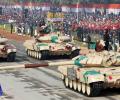
'Russia has got inherent military strength, they have a very good military equipment manufacturing infrastructure and by and large they are self-sufficient in their production capabilities'

'This is a historical moment in the political history of Sri Lanka.' 'You can see the amount of pressure that is coming from the people because nobody addressed the policy blunders, multiple corruption charges and huge scandals.'

Heads of state and big-name billionaires opened the Paris climate summit with a bang on Monday.
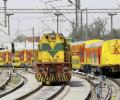
This comes as IR posted its worst operating ratio (money spent to earn every Rs 100) in 16 years, at 96.9 in 2016-17.

'Rahul inspired Indian industry with an ethos, an ethos of being more confident, more independent, more thorough, more competitive, more generous, more public-spirited, and more national and more international all at once,' remembers Naushad Forbes.

2015 is going to witness new agreements on climate change.

They all seem to forget that the Music Academy is as much an independent institution as T M Krishna is an individual musician. In drawing those red lines for the Academy management, they do not even seem to recognise that they too have crossed a red line themselves, points out N Sathiya Moorthy.

Accelerating inequality, the market dominance of tech platforms and remote working are likely to be the longest-lasting legacies of the COVID-19 crisis, the WEF said in a report on Monday. Releasing its Chief Economists Outlook report during the online Davos Agenda Summit, the WEF said that beyond managing the pandemic and vaccine rollout, these trends could shape a new era of fiscal, monetary, and competition policy. Deglobalisation is seen as the least likely of the current trends to continue in the longer term; particularly as international coordination is key to resolving global challenges such as vaccine manufacturing and distribution.

RBI governor Raghuram Rajan and the government are working towards financial inclusion.

After a hiatus of nearly two decades, the government's programme to privatise state-owned firms restarted with the handing over of debt-laden national carrier Air India to the Tata Group. With the new owner shelling out Rs 18,000 crore for the buyout of the 'Maharaja', this would be the highest-ever amount garnered through privatisation, and is even more than the cumulative sum mopped up through strategic sales from 1999-00 to 2003-04. The government had in October last year inked the share purchase agreement with the Tata Group for sale of national carrier Air India for Rs 18,000 crore. Tatas would pay Rs 2,700 crore cash and take over Rs 15,300 crore of the airline's debt.

'An area of land has already been earmarked for their protected habitation.' 'There are also steps being taken to take care of the coral zone and mangroves.'

With the new owner shelling out Rs 18,000 crore for the buyout of 'Maharaja' this would be the highest ever amount garnered through privatisation or even the cumulative sum garnered through strategic sale in 1999-00 to 2003-04. The government had garnered roughly over Rs 5,000 crore during that five-year period by privatising 10 CPSEs.
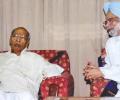
'Narasimha Rao asked me why China was doing so well in attracting foreign investments and I gave my frank opinion.' 'I told him that giving thrust to exports had to be a national effort.' 'But in India, the system was very centralised in the Government of India and the state governments had no role to play.'
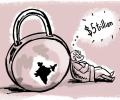
It would be a difficult task for the Indian economy to reach the $5-trillion mark a year before the International Monetary Fund (IMF) projection of 2026-27. Pankaj Chaudhary, minister of state for finance, said in the Rajya Sabha on Tuesday that the government is taking steps to make the country a $5-trillion economy at a date earlier than the IMF's projection. In that context, it would not be difficult to meet the projection in the third quarter of FY27.

Opportunity for India to take leadership in economic diplomacy.
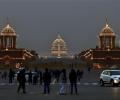
Has the Modi government been more at odds with institutions than other governments? There is no doubt that there have been more run-ins. While the RBI and CBI cases have drawn attention, there have been others, less publicised, Subhomoy Bhattacharjee points out.

The finance minister chided the central bank on Tuesday over its focus on fighting inflation, saying the Reserve Bank of India (RBI) also needed to abide by the government policy to promote economic growth.

We asked colleagues, present and past, to reflect on a man who has made such a difference to their lives and careers. Here it is then, a rich collection of memories that offer enchanting glimpses of the enigmatic Ajit Balakrishnan.

There are various estimates of India's debt to GDP ratio, but the consensus is that that it would be over 80 per cent at the end of the current fiscal year.

In the midst of third wave of COVID-19, Finance Minister Nirmala Sitharaman has come up with an impactful Budget which is balanced, fiscally prudent and growth-oriented, the USA India Chamber of Commerce has said. President of the Boston-based USA India Chamber of Commerce (USAIC) Karun Rishi, however, said it is a matter of concern that the budget lacks tangible measures to increase revenue generation. "Opting to keep the fiscal deficit at 6.9 per cent and increase capital expenditure by 35 per cent is a masterstroke. "The annual budget estimates the effective capital expenditure of Rs 10.68 lakh crore in 2022-23, making up about 4.1 per cent of the GDP," he said. "A phenomenal increase in the government's capital expenditure is likely to facilitate the expenditures on infrastructure and create jobs.
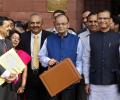
The FRBM report, to be submitted on Tuesday, is likely to have 'excuse clauses', absolving the government of meeting its fiscal commitments under certain conditions such as war or conflict, global economic meltdowns or natural disasters.

The venture is applying to the Reserve Bank of India for approvals.

Nothing, according to Deepak Lal. He argues that the contemporary attempts to control immigration in the US and UK are not nativist.
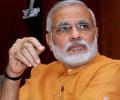
Modi's government plans to support domestic demand

The implementation of their recommendations means that an adequate apparatus to change this is at the disposal of the government.
